







Performance car engineering has entered a new phase where raw horsepower alone is no longer enough. Drivers now expect instant response, cleaner power delivery, and higher efficiency at the same time. That is why electric turbo technology is becoming one of the most discussed solutions in the world of high-performance vehicles. It is designed to solve one of the oldest weaknesses of conventional turbocharged engines: turbo lag.
In a traditional setup, a turbocharger relies on exhaust gases from the engine. Those gases spin a turbine, and that turbine compresses incoming air before it enters the combustion chamber. More compressed air allows more fuel to be burned, which increases power. This principle has worked for decades, but it also creates a delay because the turbo needs enough exhaust pressure before it can respond effectively.
An electric turbo changes that behavior. Instead of waiting only for exhaust flow, the system uses an electric motor to spin the turbine immediately when needed. That means boost can arrive much earlier, even before exhaust pressure fully builds. The result is sharper throttle response and a driving experience that feels more direct, especially during hard acceleration.
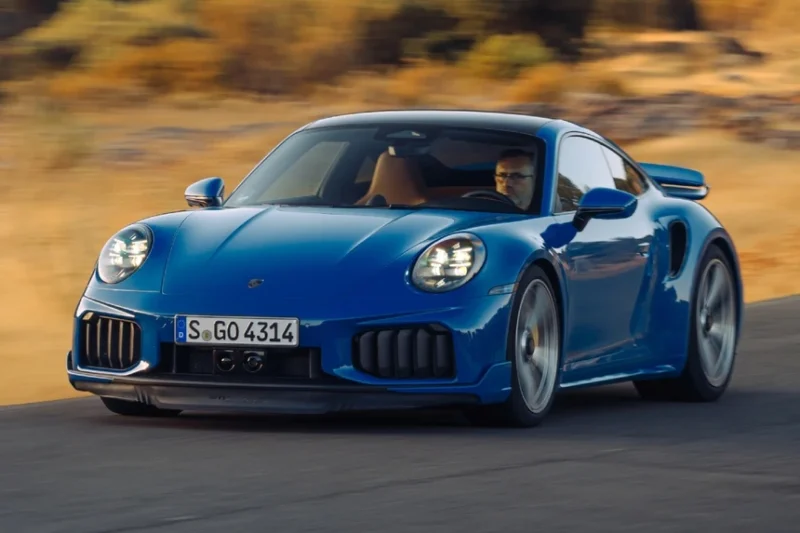
This does not mean exhaust energy disappears from the equation. In many advanced applications, electric assistance works alongside conventional turbo operation. A good example is the latest Porsche 911 Turbo S configuration, where the electric motor helps the turbo spool faster during initial throttle input. Once exhaust pressure becomes strong enough, the system can continue operating much like a traditional turbocharger.
The biggest advantage of this arrangement is the reduction of lag. In powerful sports cars and supercars, hesitation during acceleration can ruin both lap times and road performance. By delivering boost sooner, electric turbo systems help engines feel more eager and more predictable. That is especially valuable when quick response matters more than peak output figures on paper.
There is also an efficiency benefit. Because the system includes electric control, it can recover surplus energy in certain operating conditions. Instead of letting excess turbine energy go to waste, part of it can be redirected back into the vehicle’s electrical system. This concept is similar in spirit to regenerative braking in electric vehicles, although applied through a very different mechanism.
Another major benefit is packaging flexibility for performance tuning. Larger turbochargers usually improve airflow and top-end power, but they also tend to increase lag in conventional systems. Electric assistance helps overcome that trade-off. Engineers can use bigger turbo hardware without making the engine feel lazy at low rpm, which opens the door to better combustion, stronger performance, and even lower emissions in some cases.
Still, electric turbocharging is not a simple upgrade. The technology is expensive and mechanically more complex than a standard turbo setup. It was first associated with high-budget environments such as Formula 1, where cost is less of a constraint. Today, it is mostly found in premium performance models like the Porsche 911 Turbo S, select Mercedes-AMG products, and ultra-expensive supercars such as the Ferrari F80.
That complexity also brings long-term considerations. More components mean more engineering challenges, higher service costs, and a greater chance of technical issues over time. For owners, that makes maintenance knowledge and proper support even more important. Even so, for brands chasing the next leap in performance, electric turbo technology is proving that faster response can be just as valuable as greater power.